Documenting a Village Festival: A Photo Story Checklist
October 29, 2026 - Local Stories

October 29, 2026 - Local Stories
By ten in the morning the square has already divided itself into small weather systems: the card players under the plane tree, the queue at the baker, three kids orbiting the fountain, a woman selling tomatoes who never once looks up from her scale. Photograph the whole thing and you get a busy frame with nothing in it. Photograph the half-second when two of those systems touch — a hand on a shoulder, a boy stopping dead mid-run — and the square suddenly makes sense. That half-second is what this is about: not the crowd, but the gesture moving through it.
Most people arriving in a crowded square do the same thing: they lift the camera and try to fit everything in. Wide lens, deep frame, dozens of people, and a picture that reads as noise. The square is the setting; the gesture is the subject. Before you raise a camera, spend five minutes simply watching hands and feet. Hands reveal intention — the vendor counting change, the old man tapping a cigarette against his packet, the child reaching for something just out of frame. Feet reveal direction and speed, which is often what makes a picture feel alive rather than posed.
Ask yourself a plain question: if I could only keep one small thing from this square, what would it be? Whatever you answer is your subject. Everything else is either support or clutter. That single decision will steer your shutter speed, your lens choice and where you stand — the technical stuff gets much easier once the subject is named.
In a square, movement is constant and mostly unpredictable, so shutter speed is not a technicality to sort out later. It dictates what the frame will feel like. Fast speeds freeze a gesture at its peak and give you clarity; slower speeds let a body smear into its surroundings and give you rhythm. Both are legitimate, but you have to choose before the moment arrives, because you will not have time to change your mind when it does.
Two practical notes. First, know your camera's behaviour at high ISO: raising it to 1600 or 3200 to hold 1/500s indoors or in shade is usually a good trade for a sharp gesture. Second, if your camera has a silent or electronic shutter, use it in crowded squares — people behave differently when they don't hear a click, and you get closer to honest expressions.
Good street photographs are rarely reactions. They are small predictions that turned out right. Villages run on routine, which makes them wonderfully predictable. The same man buys bread at the same time. The school gate disgorges at a fixed hour. The waiter carries four cups on a tray along the same line every trip.
Plant yourself where two routines cross and wait. Give it fifteen minutes — that is usually the whole cost. Watch for signals that a gesture is loading: a shift in weight, a hand moving toward a pocket, a head turning to check who is behind. These are your cues to raise the camera, not the moment itself. Focus on the spot where you expect the action, then wait for someone to walk into it. It's a far more reliable method than chasing through the crowd, and it keeps you out of people's way.
When you sense something building, shoot three frames rather than one: just before, at the peak, and just after. The peak is often not the best picture. The half-second after — the hand dropping, the laugh fading, the two people separating — frequently holds more feeling than the obvious climax.
A crowded square is a gift for layering, because you have no shortage of material at every distance. The trick is to keep the layers legible. Aim for a strong foreground element — a shoulder, a stall edge, a hanging string of peppers — a clear midground gesture, and a background that stays quiet enough not to compete.
Depth of field does the separating work. Stopping down to f/5.6 or f/8 keeps the midground crisp while a closer foreground object softens slightly, which reads as depth rather than mess. If your foreground is too sharp and busy, it steals attention; if it is too blurred, it becomes a smudge. Move ten centimetres and it changes.
Try framing through things, too: through a doorway on the square's edge, past a parked bicycle, between two people standing at a bar. Village squares are full of natural frames — arches, awnings, the gap between a market stall and a wall. A frame within a frame does the isolating for you.
Most composition problems in crowded places are solved with your feet, not your lens. Work the edges of the square first: a wall, a step, the corner of a café terrace. Edges give you a clean background and let the crowd move across your frame instead of through it. Once you know how the light falls across the square at that hour, pick the position where the background stays uncluttered and let people pass through it.
Resist the urge to follow someone. Chasing produces tilted horizons, half-frames and attention you don't want. Instead, move in short arcs and re-set. If a picture fails, return to the same spot and wait — the rhythm will come round again.
Sort through the day's frames looking only at gesture. If the hands say nothing, the picture is probably a scene rather than a photograph. Then check what surrounds the subject: a bright sign, a passing car, a stray elbow at the frame edge. Cropping a fraction tighter often turns a busy square photograph into a clear one. Delete freely. Ten good frames from a morning in one square is a strong result, and it's more honest than fifty near-misses.
Leave the square when you notice you are photographing the same thing twice. Walk a block, come back from another direction, and the same crowd will look entirely different.
Photo: Randy_Puh / Pixabay
A practical checklist for photographing a village festival — from permissions and route scouting to key moments,...
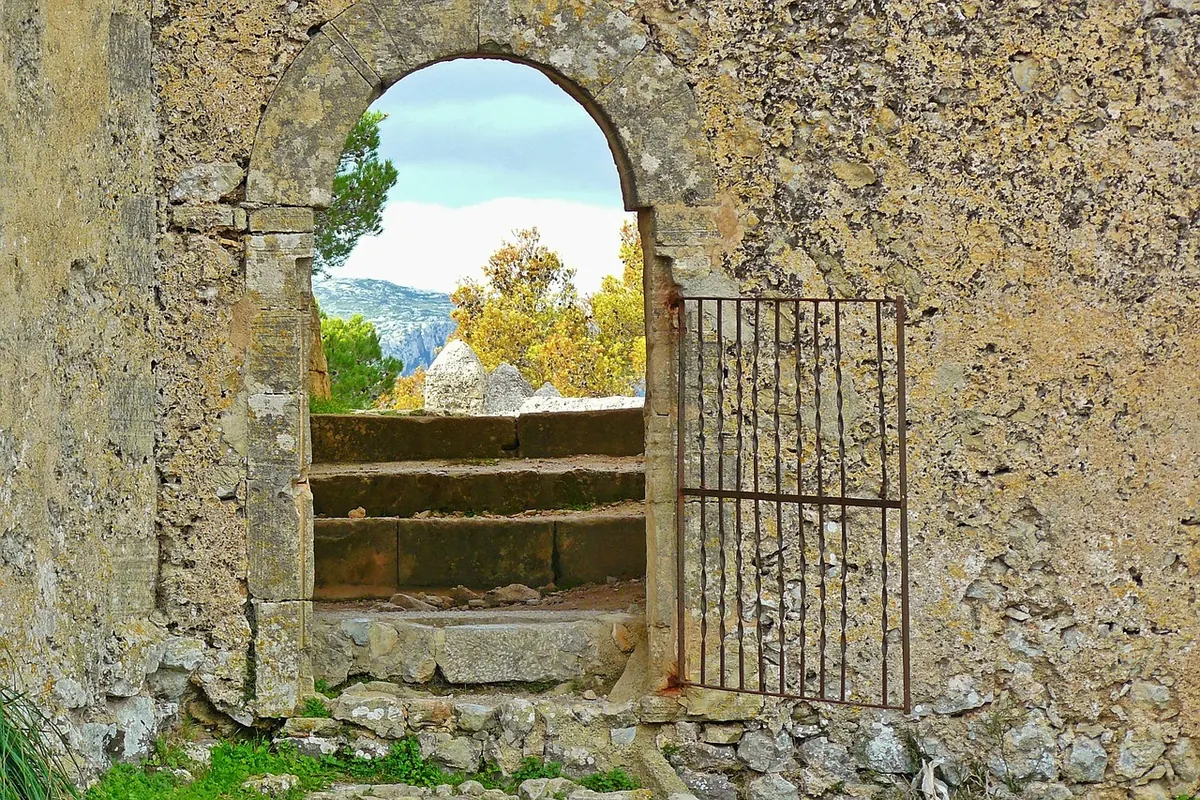
A practical guide to the doorways, stairways, and laundry lines that give Italian village streets their rhythm, and...
October 29, 2026 - Local Stories
Copyright © 2026 Sguardi Del Vicolo. All Right Reserved.