Documenting a Village Festival: A Photo Story Checklist
October 29, 2026 - Local Stories

October 29, 2026 - Local Stories
The first time you photograph a village festival, everything seems to happen at once. The band turns a corner while the sauce goes on the fire, a grandmother waves from a balcony, and somewhere behind you a procession is already forming. An hour later you have three hundred frames and no story. The second time, you arrive early with a plan. That plan is what this checklist is about: not a rigid script, but a way of working that lets you come home with a sequence that reads like the day actually felt.
Before you think about lenses, think about introductions. Most festivals are organised by a committee, a parish, a sports club or a local association, and those are the people who know the timetable, the route and the parts of the day that outsiders usually miss. Write a short message a week or two ahead, or knock on the door of the organising office. Say who you are, what you want to photograph, and where the images will go. Be specific: a personal portfolio, a local magazine, the association's own page, a print for the family whose kitchen you were allowed into.
Ask three things. First, whether there are moments the organisers would rather you did not photograph — a private mass, a family lunch, a backstage dressing room, a children's area. Second, whether anyone else is already covering the event officially; you do not want to spend the evening elbowing a volunteer photographer off the steps. Third, whether the route or the timing has changed since the printed programme went out, which it usually has.
Take down names. The person who tells you the procession leaves at 6:15 instead of 6:00 is the person you want to find again next year. And if you promise copies, send them. A small print of the drummer to the drummer's mother buys you more goodwill than any release form.
Arrive two hours early, when the piazza is still a piazza and not a wall of shoulders. Use that hour to walk the route slowly and note what you find. Look for doorways that frame a figure, a raised step that gives you twenty centimetres of height, a balcony you might be allowed onto, a patch of shade where people will gather once the sun moves. Note where the light falls at the time of day the key scenes will happen, which is often not the light you see right now.
Talk to the stallholders while they're still setting up. Some will say no, some will be delighted, and a conversation before the queue forms produces far better photographs than a surprise lens at the grill.
Festival days follow a rhythm, and the rhythm is your timetable. Setup and dressing are quiet and generous; people are curious and unhurried. The formal moments — a mass, a blessing, a procession, an award — are the ones with the shortest windows and the strictest etiquette. The meal rush is chaotic and full of expression but hard to shoot without becoming a nuisance. Dusk is short and forgiving. Cleanup is where the honest pictures live.
Work in this order:
Give yourself permission to stop shooting for fifteen minutes in the middle. You will see more, and the rest of the evening will be better for it.
Twenty good photographs in a considered order beat eighty strangers in a folder. A sequence needs a frame that opens — often a wide, quiet establishing shot with room for the eye to enter — then movement between scales: wide, medium, detail, wide again. It needs a few images that bridge scenes, such as a figure walking from one side of the village to the other, and a closing frame that suggests the day is over rather than simply stopping.
Sort in camera order first, then rearrange. Ask of each picture: what does this add that the previous one did not say? If two frames do the same job, keep the stronger one. Look for pairings — a child's face next to an old man's hands, an empty chair next to a crowded table. A sequence is not a record of everything; it is an argument about what the festival meant.
Being allowed close is a privilege that has to be maintained shot by shot. Ask before photographing faces when you can, and learn the local gestures for "may I?" — a raised camera and a questioning look does most of the work. Show people the back of the screen when they are curious; it turns a transaction into a conversation. Stop immediately if someone shakes their head, and offer to delete without being asked.
Children need extra care: ask a parent or guardian first, every time, and skip the shot if nobody is clearly responsible for the child. In a church or during a religious rite, dress and behave as the congregation does, keep the shutter quiet, and never use flash in the middle of a prayer. Do not block the procession for a better angle, do not photograph people eating at close range, and step back from grief, illness or argument. Privacy rules and the expectations around publishing images of identifiable people vary by country and by use, so check what applies to you before you publish or sell anything — particularly for editorial or commercial work.
Carry a small notebook and write down names, times and villages while they are still fresh — who the drummer was, what the dish is called, when the procession actually left. Rename and back up the cards the same night, before the tiredness wins. A caption written at midnight, even a rough one, is worth three written a month later from memory.
Edit properly, at home, with the notes beside you. Aim for a tight set — twenty-five to thirty frames is generous for a single day. Send the organisers a link, post two or three images rather than the whole folder, and print the ones you promised. Then write a short list of what you missed: the frame you wanted and did not get, the spot you should have stood in, the conversation you should have had in the morning. That list is the real checklist, and it gets shorter every year.
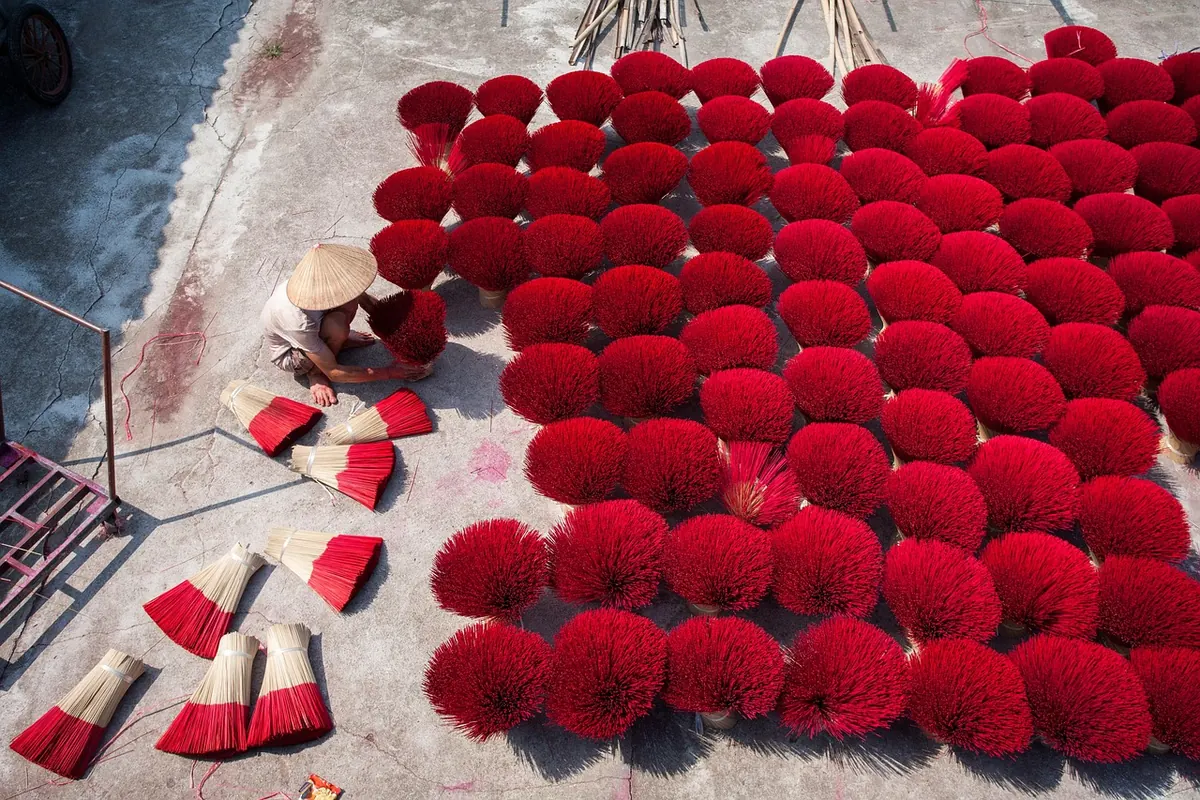
Photo: xuanduongvan87 / Pixabay
A practical guide to the doorways, stairways, and laundry lines that give Italian village streets their rhythm, and...
A practical guide to photographing decisive street moments in busy village squares — using shutter speed,...
October 29, 2026 - Local Stories
Copyright © 2026 Sguardi Del Vicolo. All Right Reserved.